
Symptoms
Functional Neurological Disorder (FND) is a neurological condition in which there is a problem with how the brain and nervous system function.
The brain and nervous system do not send and receive signals correctly, leading to a range of movement, motor, sensory, and cognitive symptoms. These symptoms can be disabling and often unpredictable.
Symptoms of FND can sometimes resemble those seen in other neurological conditions, such as Multiple Sclerosis, Parkinson’s Disease, or Epilepsy. However, they are distinguished by how they present and behave. In FND, symptoms arise from disruptions in how the brain communicates, rather than from structural damage or disease.
The presentation of FND can vary significantly from person to person. Some people may experience one or two symptoms, whilst others may experience several. Symptoms can also change over time, and their severity and frequency may fluctuate.
FND can also co-exist with other neurological or medical conditions. This means that not all symptoms a person experiences will necessarily be caused by FND, so comparisons with others should be made with care.
IMPORTANT NOTE:
This information is provided as a general guide and should not be used to self-diagnose. FND cannot be diagnosed from symptoms alone. If you are experiencing neurological symptoms, please seek medical advice and discuss them with a qualified clinician, such as a neurologist.

Many neurological conditions share similar symptoms, but how they present can differ. The examples below show how FND can present within recognised neurological patterns, which can vary from person to person. Some of these presentations are core characteristics of FND, but diagnosis is made by identifying specific clinical signs, not by symptoms alone.
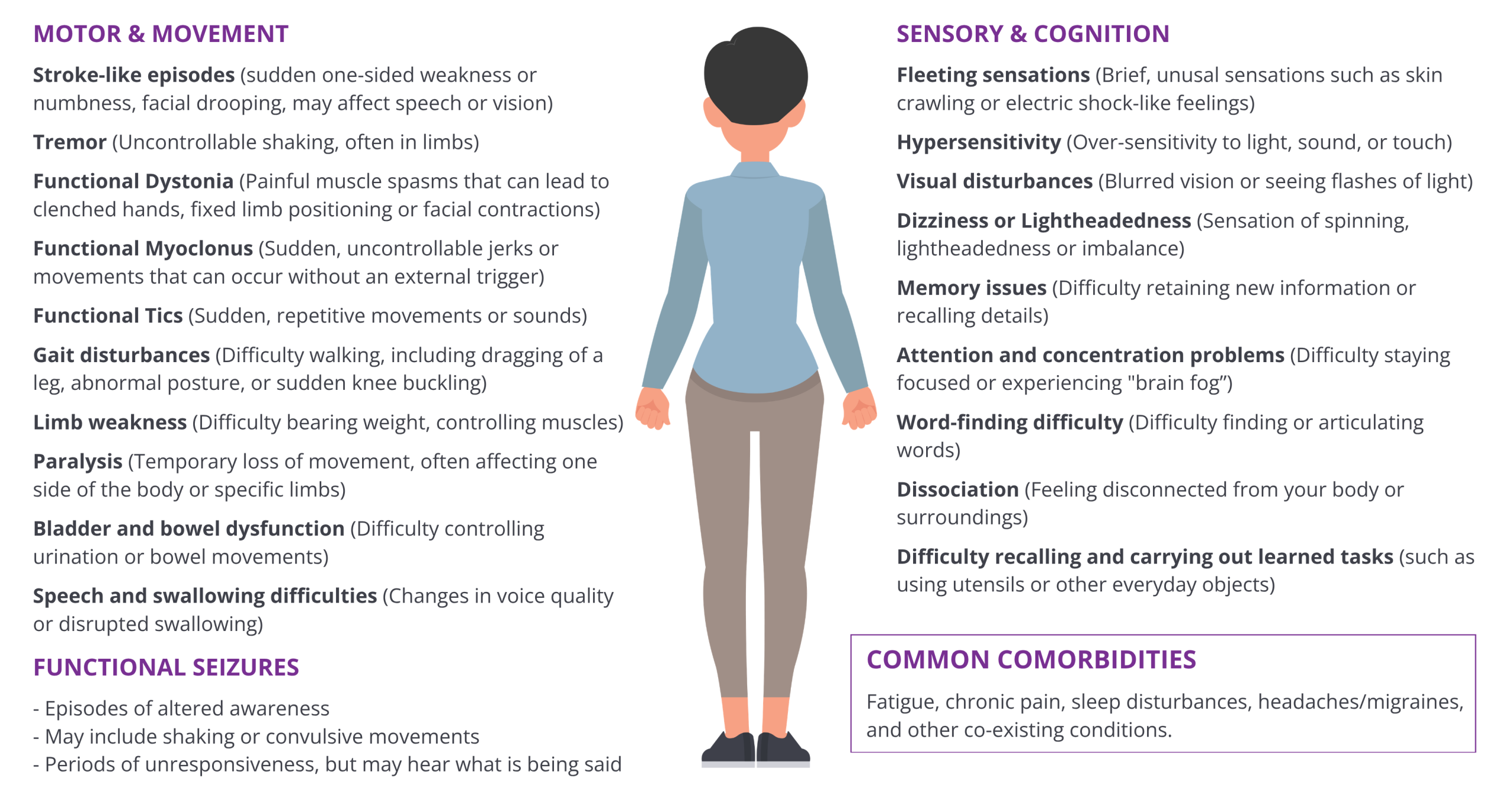
Motor & Movement
Stroke-like episodes (sudden one-sided weakness or numbness, facial drooping, may affect speech or vision)
Tremor (Uncontrollable shaking, often in limbs)
Functional Dystonia (Painful muscle spasms that can lead to clenched hands, fixed limb positioning or facial contractions)
Functional Myoclonus (Sudden, uncontrollable jerks or movements that can occur without an external trigger)
Functional Tics (Sudden, repetitive movements or sounds)
Gait disturbances (Difficulty walking, including dragging of a leg, abnormal posture, or sudden knee buckling)
Limb weakness (Difficulty bearing weight or controlling muscles)
Paralysis (Temporary loss of movement, often affecting one side of the body or specific limbs)
Bladder and bowel dysfunction (Difficulty controlling urination or bowel movements)
Speech and swallowing difficulties (Changes in voice quality or disrupted swallowing)
FUNCTIONAL SEIZURES
Episodes of altered awareness
May include shaking or convulsive movements
Periods of unresponsiveness, but may hear what is being said
Sensory & Cognition
Fleeting sensations (Brief, unusal sensations such as skin crawling or electric shock-like feelings)
Hypersensitivity (Over-sensitivity to light, sound, or touch)
Visual disturbances (Blurred vision or seeing flashes of light)
Dizziness or Lightheadedness (Sensation of spinning, lightheadedness or imbalance)
Memory issues (Difficulty retaining new information or recalling details)
Attention and concentration problems (Difficulty staying focused or experiencing “brain fog”)
Word-finding difficulty (Difficulty finding or articulating words)
Dissociation (Feeling disconnected from your body or surroundings)
Difficulty recalling and carrying out learned tasks (such as using utensils or other everyday objects)
COMMON COMORBIDITIES
Fatigue, chronic pain, sleep disturbances, headaches / migraines, and other co-existing conditions.
FND can present with a wide range of neurological symptoms, which may change over time. Support from healthcare professionals familiar with FND can help with management. Research is ongoing to improve understanding and care.
For more detailed information and resources, visit the Neurosymptoms website
©FND Action. All Rights Reserved
About Us | Disclaimer | Privacy Policy
Registered Charity (1169554)


5a New Road Avenue
Chatham, Kent
ME4 6BB
Email: contact@fndaction.org.uk